
Q & A
Frequently asked questions
-
How long can a modular walkway tent be?
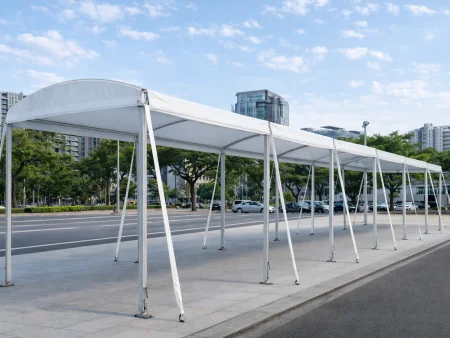
A modular walkway tent has no fixed maximum length. Because it is based on a modular design, additional 3 × 3 m sections can be connected to extend the covered walkway according to the project's requirements. The final length depends on the site layout, pedestrian traffic flow and intended application. Long covered walkways can be created to connect buildings, event venues, exhibition halls, hotels, parking areas and other outdoor facilities. If the project includes corners, intersections or uneven site conditions, customized configurations can also be incorporated. Simply provide your site dimensions or layout drawings, and Wen's Phoenix can recommend the most suitable walkway solution.
-
Can a modular walkway tent connect different buildings?
Yes. One of the primary functions of a modular walkway tent is to create protected pedestrian connections between separate buildings or outdoor facilities. The covered walkway system can be installed between office buildings, schools, hotels, exhibition halls, sports venues, temporary structures and event tents, allowing people to move comfortably between locations while being protected from sun and rain. Because the system is modular, it can also be expanded, extended or reconfigured in the future as site requirements change, making it a practical solution for both temporary installations and permanent outdoor circulation routes.
-
What is the difference between PVC fabric, Oxford fabric, and PE mesh fabric?
PVC fabric, Oxford fabric, and PE mesh fabric can all be used for outdoor shade sails, but they differ in rain protection, breathability, edge reinforcement, and suitable applications. ★ PVC Fabric PVC fabric provides sun protection, UV resistance, waterproofing, and rain protection. Wen’s Phoenix offers Serge Ferrari PVC fabric as well as PVC fabrics made in Taiwan and China, allowing customers to select the appropriate specification based on project requirements and budget. PVC fabric is suitable for fully tensioned shade sails in outdoor spaces that require both sun and rain protection. ★ Oxford Fabric Oxford fabric provides sun protection, UV resistance, and water repellency while remaining relatively lightweight. It is suitable for patios, recreation areas, and general outdoor spaces where sun protection is the primary requirement. Water-repellent fabric is not fully waterproof, so Oxford fabric is not recommended for prolonged rain protection. ★ PE Mesh Fabric PE mesh fabric provides sun protection, UV resistance, and ventilation. The open knitted structure allows airflow and lets rainwater pass through, so PE shade mesh is not waterproof. It is suitable for large outdoor shaded areas such as schools, parks, and playgrounds.
-
Can outdoor shade sails provide rain protection?
Whether an outdoor shade sail can provide rain protection depends primarily on the fabric material. PVC fabric is waterproof and suitable for rain protection, Oxford fabric is water-repellent, while PE knitted shade mesh is not waterproof. For outdoor spaces that require both sun and rain protection, PVC fabric is recommended. In addition to selecting a waterproof fabric, the shade sail should be designed with sufficient height differences between fixing points to create an appropriate slope and allow rainwater to drain in the intended direction. Although PVC fabric is waterproof, this does not mean that water pooling can be prevented under all weather conditions. Heavy downpours, prolonged rainfall, insufficient slope, or changes in fabric tension may cause water to collect on the canopy. Weather conditions, fabric tension, and drainage should therefore be monitored during use. Before planning an outdoor shade sail, first determine whether the primary requirement is sun protection only, sun protection with water repellency, or both sun and rain protection. The appropriate fabric and installation method can then be selected accordingly.
-
Can shade sails be customized in size and shape?
Wen’s Phoenix outdoor shade sails can be customized in size and shape based on site dimensions, required shade coverage, fixing-point locations, and intended use. Common shade sail designs include triangular, quadrilateral, and other custom shapes. For larger outdoor areas, multiple shade sails can be overlapped, arranged in different configurations, or installed at varying heights to increase shade coverage while creating distinctive architectural and landscape effects. The finished size of a shade sail is not simply cut to match the exact distances between fixing points. Because different fabrics have different levels of stretch, the fabric dimensions are adjusted according to the material properties, fixing-point locations, and required tension. This reduction in size allows sufficient room for proper tensioning during installation.
-
What if there are no suitable fixing points for the shade sail?
If there are no suitable existing fixing points for a shade sail, Wen’s Phoenix can design support posts based on the site conditions to provide the required anchoring and tensioning points. Before planning the shade sail, a site survey is conducted to determine whether buildings, walls, existing columns, or other structures can provide suitable fixing points. The number, location, and height of the fixing points are then planned according to the required shade coverage. If suitable fixing points are not available, Wen’s Phoenix can design support posts and foundations based on the site conditions and shade sail dimensions. This makes freestanding shade sail installations possible in open areas such as parks, plazas, campgrounds, and parking areas.
-
How are outdoor shade sails secured?
Outdoor shade sails are secured to suitable fixing points and tensioned using steel cables, turnbuckles, and other connection hardware. When an existing building or structure is suitable for anchoring, expansion anchors and eye bolts can be installed to create fixing points. Steel cables, turnbuckles, and other hardware are then used to tension and secure the shade sail. If suitable fixing points are not available, support posts and foundations can be installed separately. The final anchoring method is determined based on the building structure, shade sail dimensions, fixing-point locations, and site conditions to achieve the required fabric tension and shade sail shape.
-
Why do shade sails require different fixing heights and reduced fabric dimensions?
Outdoor shade sails require different fixing heights and reduced fabric dimensions to create proper tension while supporting rainwater drainage, fabric shape, and the natural stretch of the material. Fixing points at different heights create a slope that directs rainwater toward the intended drainage direction and helps reduce the risk of water pooling on the shade sail. Shade sail fabrics also have different levels of stretch, so the finished fabric is made smaller than the actual fixing-point dimensions. The amount of reduction is determined based on the fabric properties, anchoring method, and required tension to achieve a properly tensioned shade sail.
-
Should shade sails be removed during heavy rain, strong winds, or typhoons?
Wen’s Phoenix uses EASY analysis software during the shade sail design process to evaluate wind loads based on the sail size, shape, fabric, fixing points, and anchoring conditions. If the forecast wind conditions are expected to exceed the design limit of the specific project, the shade sail should be removed in advance. The edge reinforcement also varies by fabric type. PE knitted shade mesh and Oxford fabric primarily use braided rope for edge reinforcement, while PVC shade sails use steel cables. As a result, their wind resistance characteristics differ. The acceptable wind conditions should therefore be determined by the engineering analysis for each individual project rather than by fabric type alone. Although PVC fabric is waterproof and suitable for rain protection, heavy downpours or prolonged rainfall may still cause water to pool if rainfall exceeds the drainage capacity of the shade sail. Drainage conditions should be monitored during use, and immediate safety measures should be taken if abnormal water accumulation occurs.
-
How should outdoor shade sails be cleaned and maintained?
Regular cleaning and inspection can help extend the service life of an outdoor shade sail and maintain proper fabric tension, fixing points, and anchoring hardware. Routine maintenance should include removing leaves, dust, and other surface debris. Avoid using sharp tools or harsh cleaning chemicals that could damage the fabric or its protective coating. Eye bolts, steel cables, turnbuckles, and other hardware should also be inspected regularly. If the shade sail becomes loose or any hardware shows signs of loosening, corrosion, or other deterioration, adjustments or repairs should be completed before continued use. For questions about shade sail cleaning, maintenance, hardware replacement, or ongoing care, please contact a Wen’s Phoenix sales representative. Our team can help assess the condition and recommend appropriate maintenance solutions.